
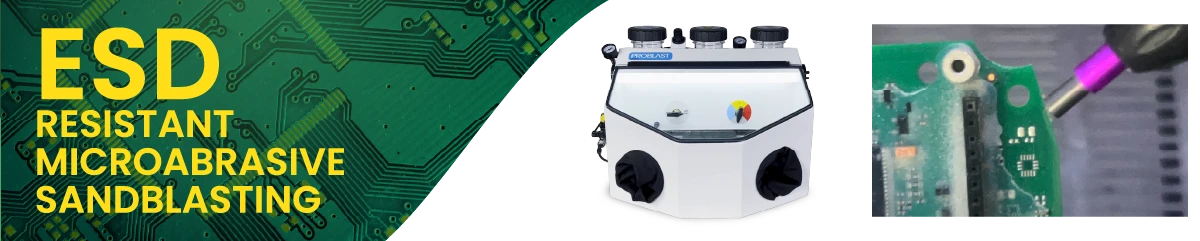
Vaniman’s ESD microabrasive sandblasters are designed for processes where electrostatic discharge risk matters, especially conformal coating removal and precision surface work on sensitive electronics and components.
Our ESD approach combines grounding and ionized airflow (where applicable) to help create a continuously ESD-resistant work environment.
-
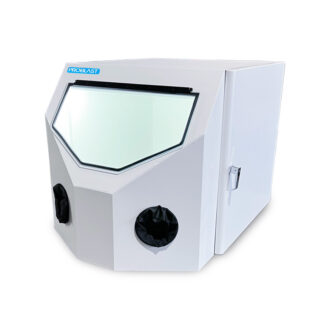 Master Problast Titan ESD – Electrostatic Discharge Resistant Sandblaster – 80081$5,800.00View Details
 -
 Master Problast 3 ESD for Conformal Coating Removal – 80056$2,875.25View Details
 -
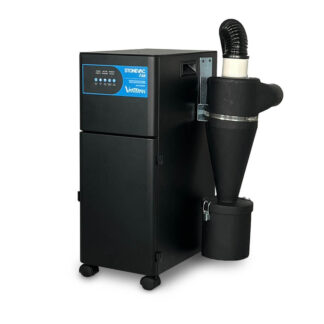 StoneVac AM – SLS 3D Printing Vacuum & Powder Recovery – 11051$2,402.31View Details
 -
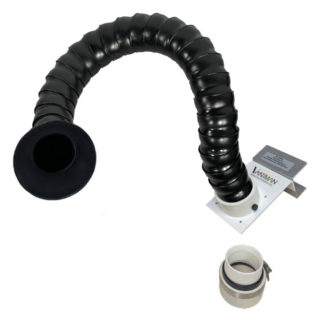 Flex Hose Kit ESD (Black) – 96108$242.95View Details
 -
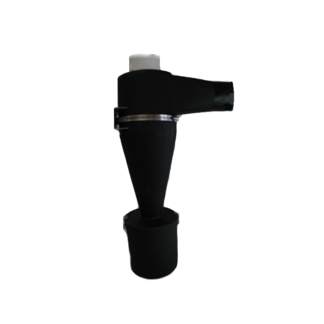 ESD Accumulator – Pre Filter Cyclone for Dust Collectors – Antistatic – 10519$232.65View Details
 -
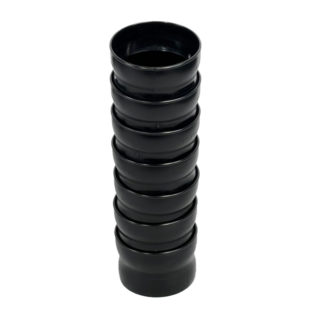 Flex Hose ESD-Resistant Addon Links – 96106 (96107)$34.50View Details
Electrostatic discharge (ESD) happens when built-up static electricity rapidly transfers between surfaces, often damaging sensitive electronics, causing intermittent failures, or disrupting precision processes. In microabrasive blasting, static can be generated by moving air and media; controlling it typically requires a combination of grounding/bonding plus charge neutralization (ionization) when needed.
Many electronics-handling operations align ESD controls to recognized frameworks like ANSI/ESD S20.20 (common in North America) and IEC 61340-5-1 (international), which emphasize defining ESD-protected areas, reducing charge generation, and dissipating/neutralizing charges through grounding, materials selection, and ionization. For environments where static could contribute to ignition risk, guidance like NFPA 77 is commonly referenced for grounding and bonding best practices.
Which Vaniman ESD solution is right for you?
Need ionized airflow + fully grounded cabinet/work surface (great for conformal coating removal): Master Problast 3 ESD (80056).
Need a larger cabinet + higher throughput: Master Problast Titan ESD (80081).
Want to reduce static charge during dust separation upstream of your dust collector: ESD Accumulator Cyclone (10519).
Doing powder bed additive manufacturing powder recovery (SLS/SLM/etc.): StoneVac AM (11051) with included ESD-resistant accumulator.
Frequently Asked Questions about Electrostatic Discharge
What is ESD and why does it matter in microabrasive blasting?
ESD is the rapid discharge of built-up static electricity. In blasting, moving air and media can generate charge; controlling ESD helps reduce risk to sensitive electronics and can improve process stability in precision work.
How does the Master Problast 3 ESD create an ESD-resistant environment?
It uses ionized airflow to flood the cabinet with neutralizing ions and features a fully grounded cabinet and work surface to support user/part grounding. Users may add additional protection with a grounding strap.
What is the best blasting media for conformal coating removal?
Our VanAcrylic blasting media is our go-to recommendation for removing conformal coating from PCBs. It is angular enough to efficiently remove layers of conformal coating, yet lightweight enough to avoid damaging the electrical components or the solder mask.
Do Vaniman ESD blasters require a dust collector?
Yes. The Master Problast 3 ESD requires dust collection, and we recommend the Abrasive Vac (10660) for operation with this blaster. The Master Problast Titan ESD also requires dust collection, and we recommend the StoneVac II (10201) dust collector with an Accumulator.
What does the ESD Accumulator (10519) do?
It’s a cyclone pre-filter accessory designed to reduce ESD/static charge during cyclonic separation, helping manage static created during dust/debris separation before material reaches the main collector filter.
Is the StoneVac AM fully ESD-safe?
The StoneVac AM includes an ESD-resistant cyclone accumulator, making it a Class II, Division 2 vacuum system, but the unit’s case is not composed of ESD-resistant material, so it’s best positioned as powder recovery with an ESD-resistant pre-separation component. If you have questions about whether you need a fully ESD-resistant dust collector, please contact us.
Talk to an ESD product specialist by clicking here or call a real, live, Southern California-based human at (760) 723-1498.