
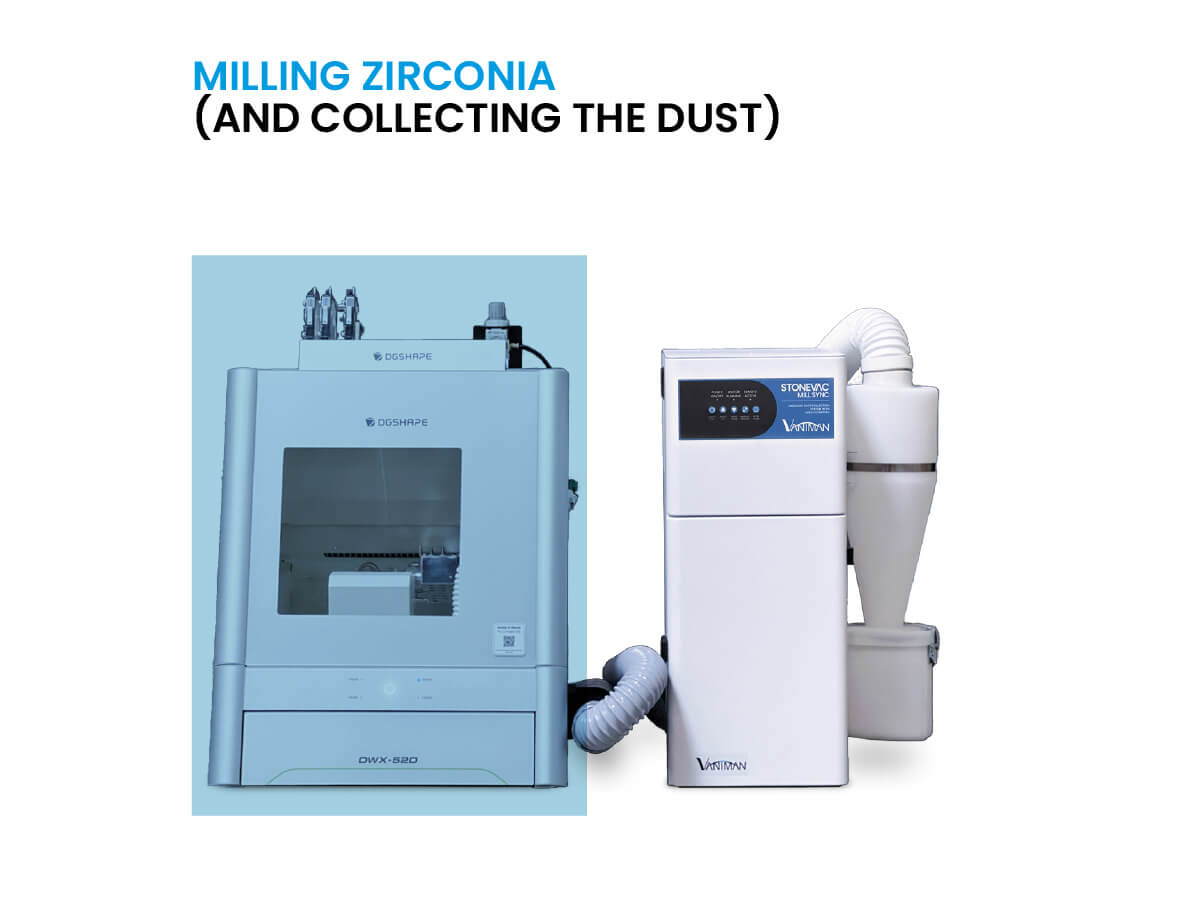
Every time your mill cuts zirconia, it produces dust. The dust you see left over in the milling chamber is only some of it. The rest is invisible, and probably floating closer to your head than you’d like.
And as dental labs have adopted CAD/CAM milling over the decades, owners and technicians have had to reckon with a byproduct they may not even be aware of.
Why Zirconium Dust Requires Special Attention
The CAD/CAM revolution is ongoing. We are now in a new phase with more software integration than ever before. AI has even entered the workflow in various forms.
But even with all these advancements in technology, mills still create dust.
Lots of it.
And Zirconia dust is so fine, it becomes an airborne health and safety concern the moment it’s created.
Left unaddressed, this creates a very serious health and safety issue. OSHA gives us permissible exposure limits for zirconium compounds for exactly this reason.
Understanding how zirconium dust behaves (and how it affects dust collector performance) helps lab owners create the safest setup for their business.
Two Kinds of Dust Collectors: High Suction vs. High Volume
The effectiveness of a dust collector depends on the underlying vacuum technology. Many mill manufacturers offer a dust collector they build in-house, but very few of them are satisfactory. (It’s not their fault; mill manufacturers specialize in mills, not dust collectors. Dust collection is its own specialty.)
There are two kinds of dust collectors: high suction and high volume.
Choosing the right one affects both your mill’s performance and your team’s health and safety. At a minimum, HEPA filtration is recommended for collecting milled zirconia dust.
The Technical Difference: Flow vs. Static Pressure
Airflow through a vacuum source is measured two ways:
- Flow (cubic feet per minute, or CFM): how much air is moving
- Static pressure (inches of water): how forcibly the vacuum operates
Volume is the measure of how much air is moving to the vacuum source. High-volume vacuums use low-speed fans to create a large volume of air flow. Typically, though, they provide low suction at the point of capture.
Which One Should You Choose for Zirconium?
For milling zirconium, high-volume is not what you need. Zirconia dust can block airflow through the filter, drastically reducing airflow at the source. This will eventually cause damage to systems. CFM is the wrong metric to shop for.
A high-pressure suction dust collector with a bypass motor is really what you want.
A high suction motor will prevent clogging, and can overcome a clogged filter if it does happen. It will provide continual suction at the source capture point, which is critical for long days of milling.
Don’t Overlook Duty Cycle and Motor Type
How many hours a day your mill runs matters just as much as suction type, as does motor type. A standard brush motor under heavy use may need maintenance or replacement within months or even weeks.
Brushless motors, on the other hand, last five to ten times longer.
They cost more upfront, but for for long hours milling zirconia, that cost is quickly recovered through near-zero maintenance over the unit’s life.
Talk to a Dust Collection Specialist
Proper dust collection is extremely important for:
- Optimal performance from the milling machine
- Extending the life of cutting tools
- Controlling zirconia dust
Give us a call if you’ve got questions! We can help you ensure you’re applying the right dust collection technology to your milling process.
Contact Vaniman
Vaniman has been making dust collectors for over four decades. Here are some high-pressure dust collectors with HEPA filtration that we recommend for dental mills:
-
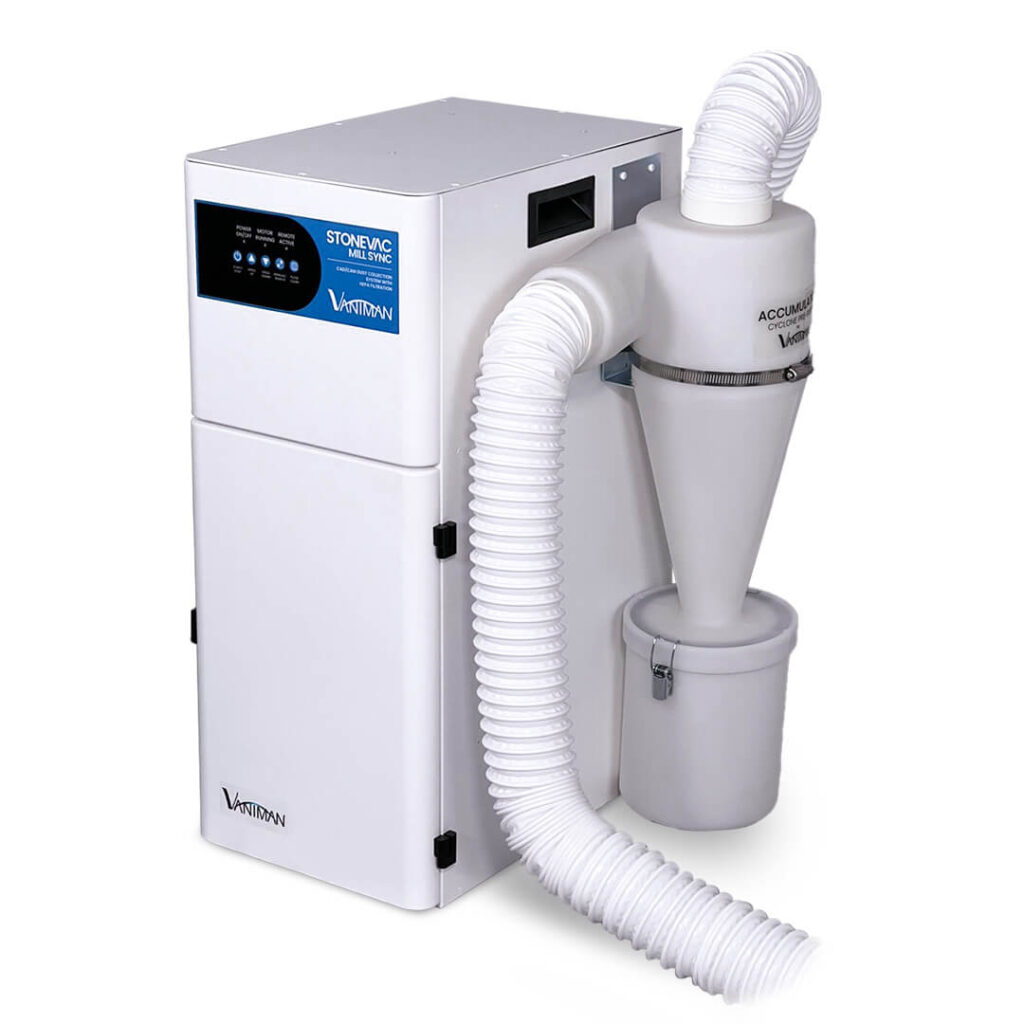
StoneVac Mill Sync for CAD/CAM – 11060
$2,158.93 -
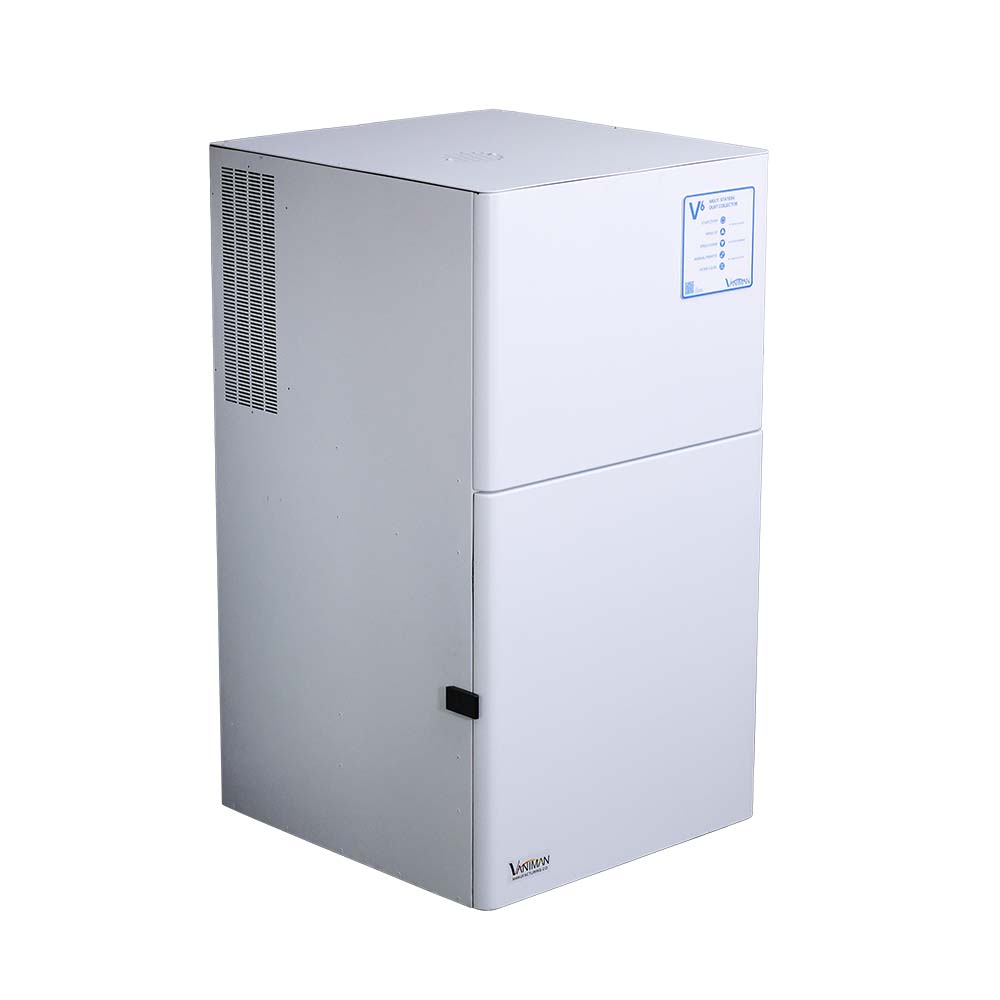
V6 SE Multi-Station Dust Collector – 10281
$3,899.00
Resources:
OSHA: Permissible Exposure Limits – https://www.osha.gov/annotated-pels/table-z-1