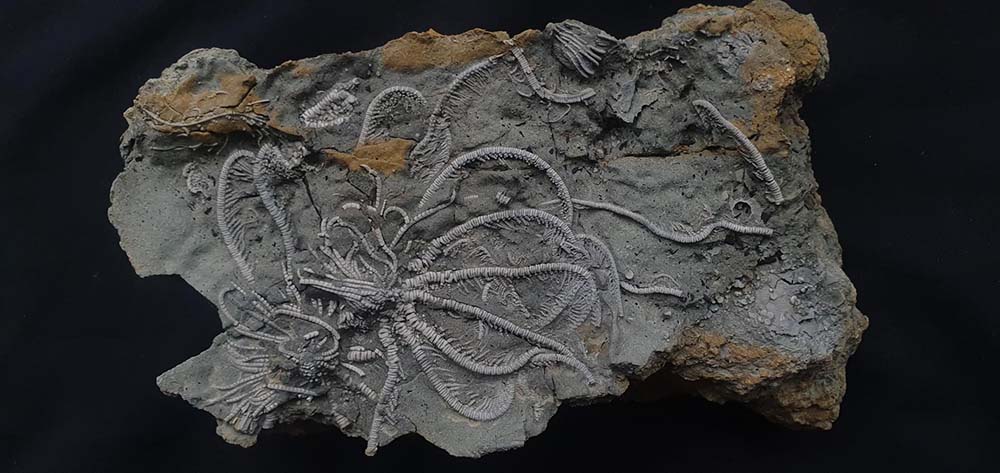
Preparing a fossil is a careful balance: remove enough matrix to reveal the specimen, but not so much that you damage the fossil underneath. Air scribes, chisels, and picks are all necessary, but when the work gets into fine details and difficult-to-reach areas, you’ll need one more key tool to level up your prep: a microabrasive sandblaster.
When Does Fossil Prep Call for Microabrasive Blasting?
Right about when you wish you had a magic eraser, that’s probably when it’s time for a sandblaster.
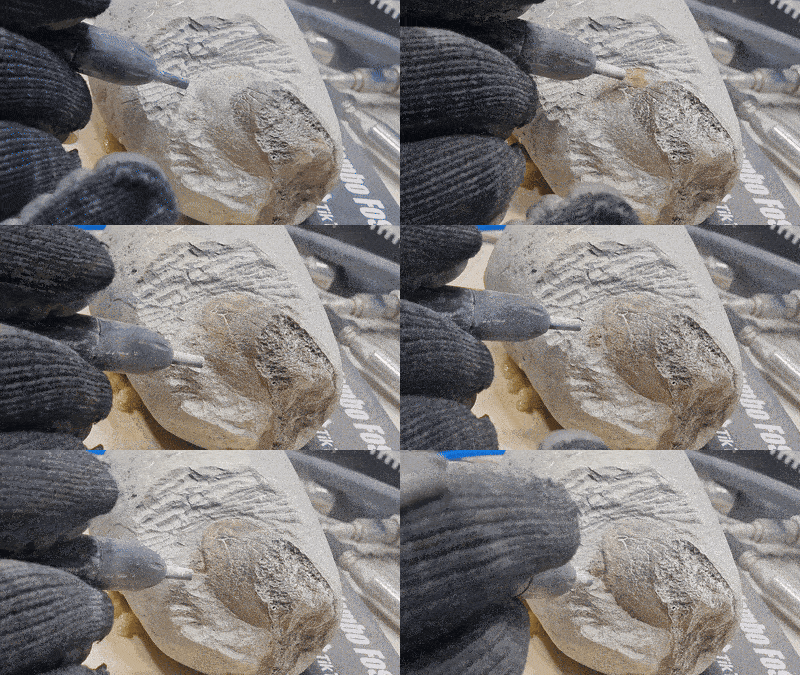
A microabrasive sandblaster uses compressed air to direct a controlled stream of media through a small, pencil-style nozzle. What you get out of the nozzle is a consistent flow of fine, abrasive media at a pressure of your choosing. It’s aggressive enough to remove softer rock without damaging fossilized material.
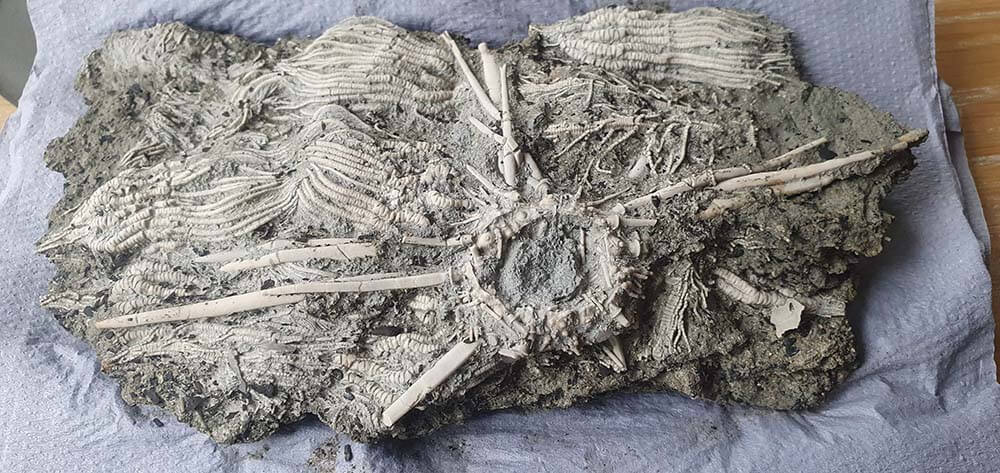
For fossil preparators, that means you can remove matrix in areas that may be difficult to approach with other tools—between ribs, underneath ridges, around joints and other small features, across detailed surfaces
Choosing the right media, particle size, and air pressure gives you additional control over how aggressively material is removed. It’s a highly versatile tool that complements air scribes and other traditional preparation tools nicely.
Vaniman’s Portable Sandblaster: Versatility, Quality, and Affordability
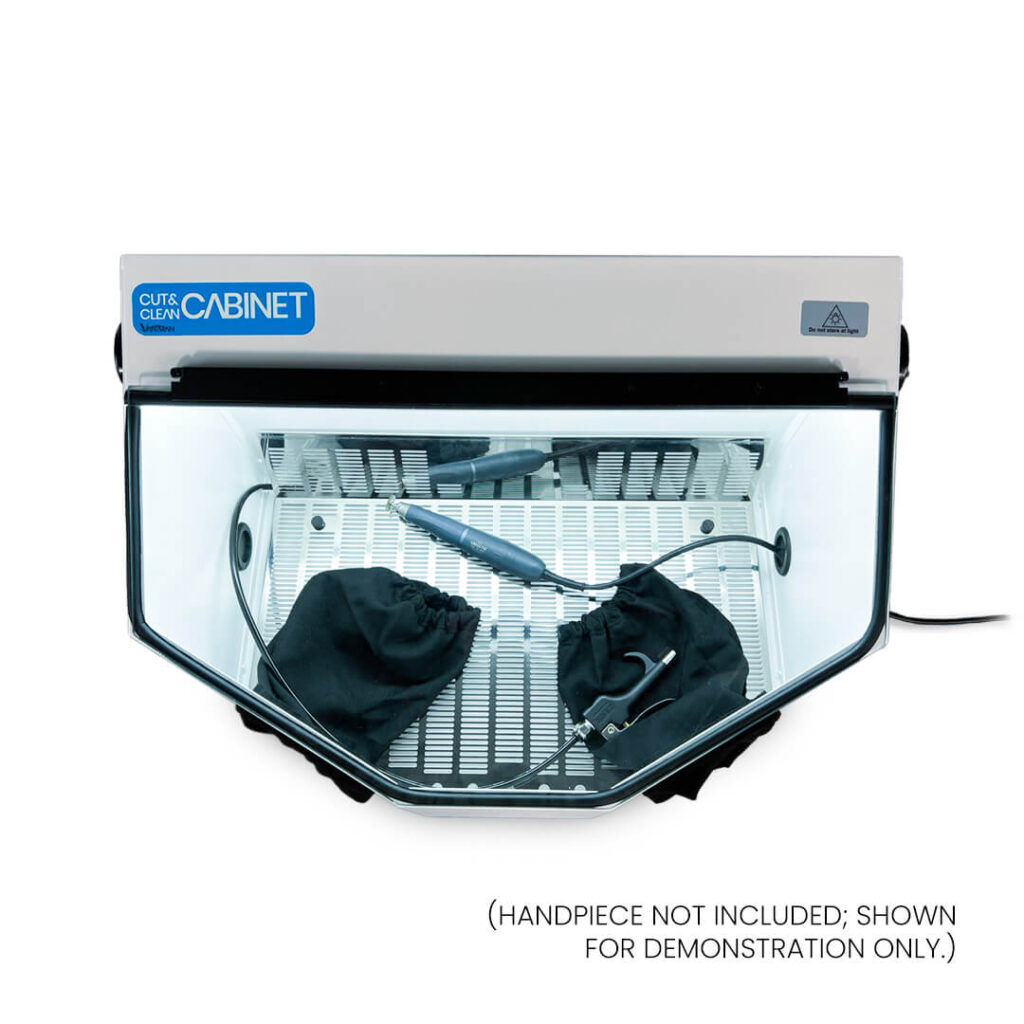
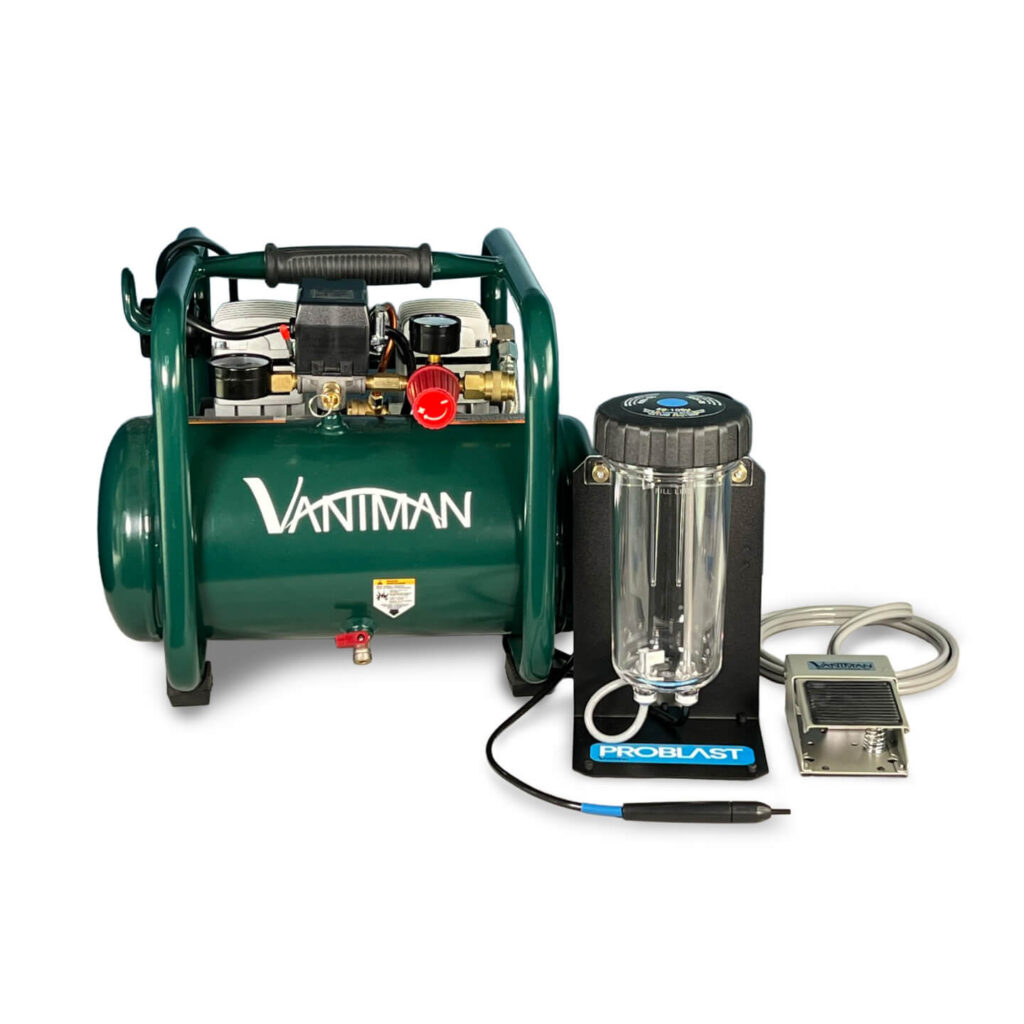
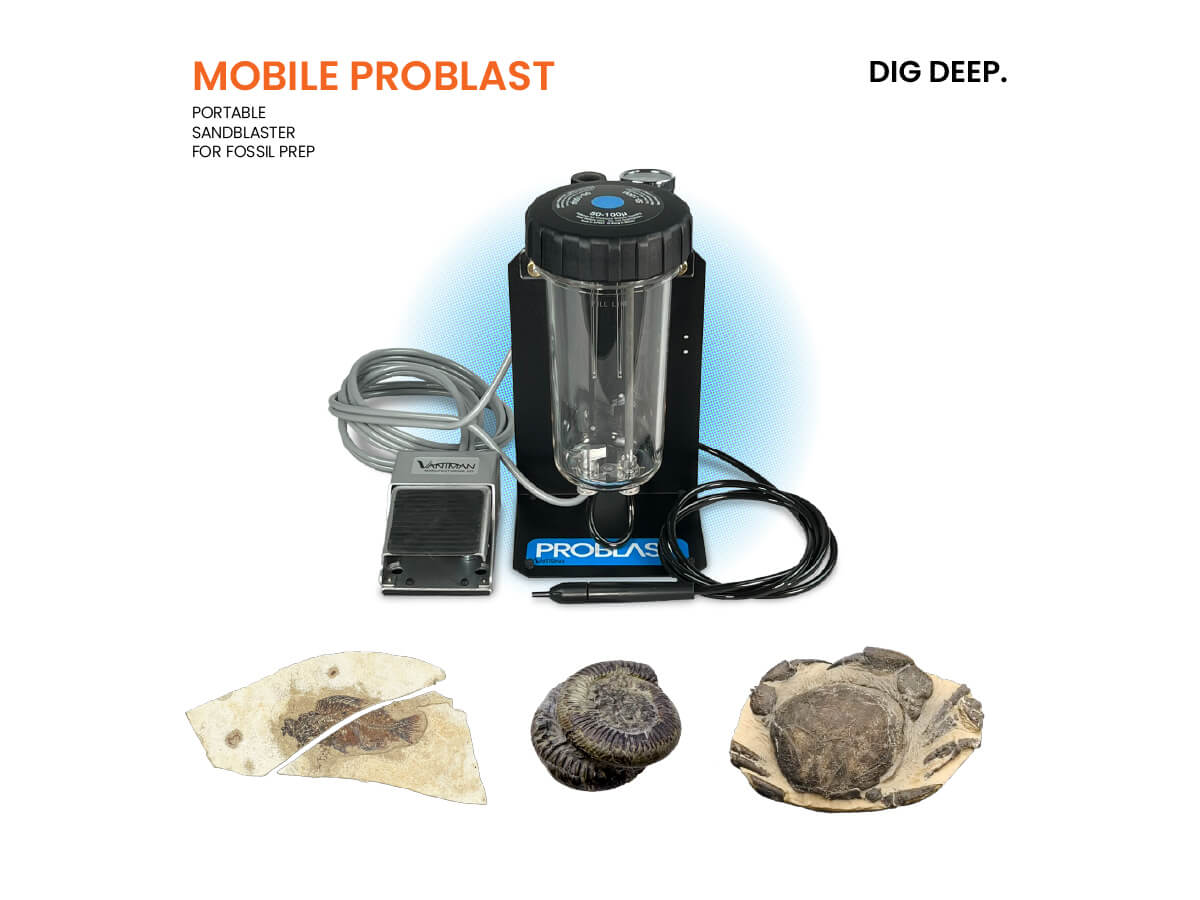
The Vaniman Mobile Problast is a compact micro-abrasive sandblaster designed to go wherever your compressed-air supply can reach. Its pencil-style handpiece and six-foot hose make it easy to position around a specimen or inside a blasting cabinet.
The system includes an adjustable pressure regulator, foot-pedal operation, and a 1,000 mL media tank. Depending on the tank and nozzle configuration, it can accommodate dry blasting media ranging from 25 to 250 microns, giving fossil preparators a variety of options.
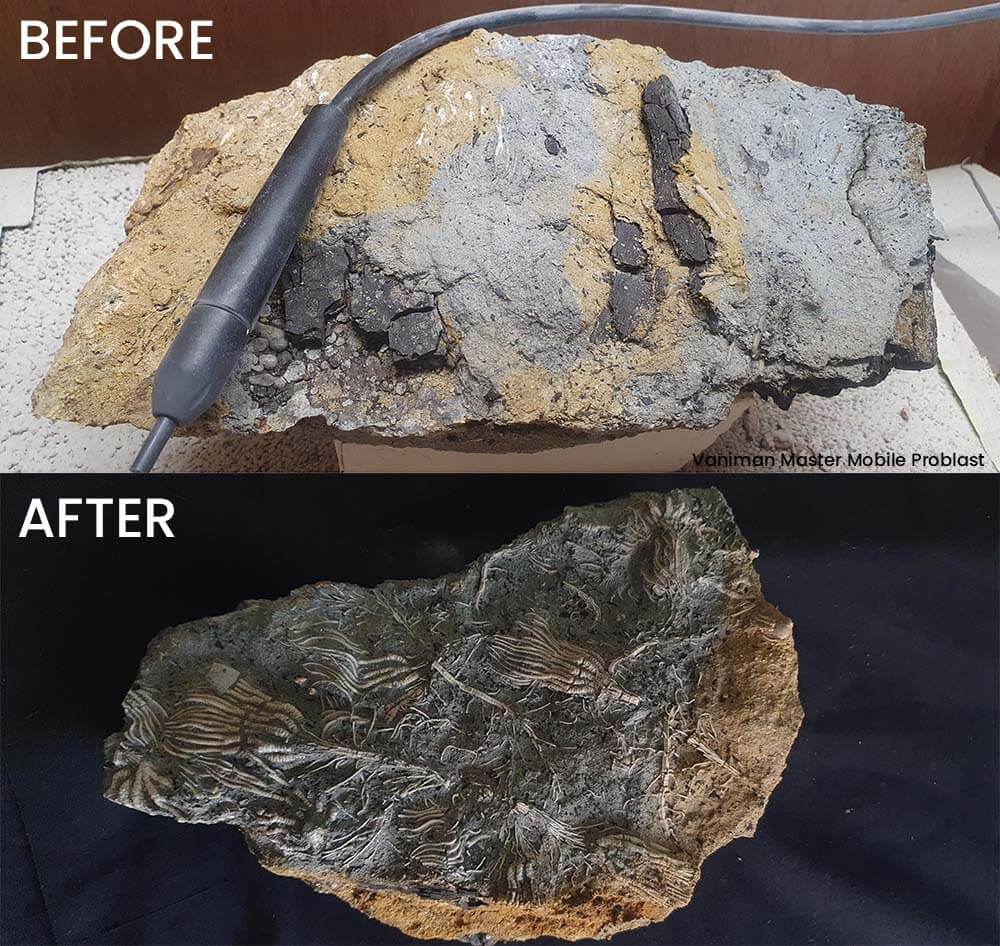
And this isn’t just a theoretical application. Fossil preparators around the world are already putting the Mobile Problast to work.
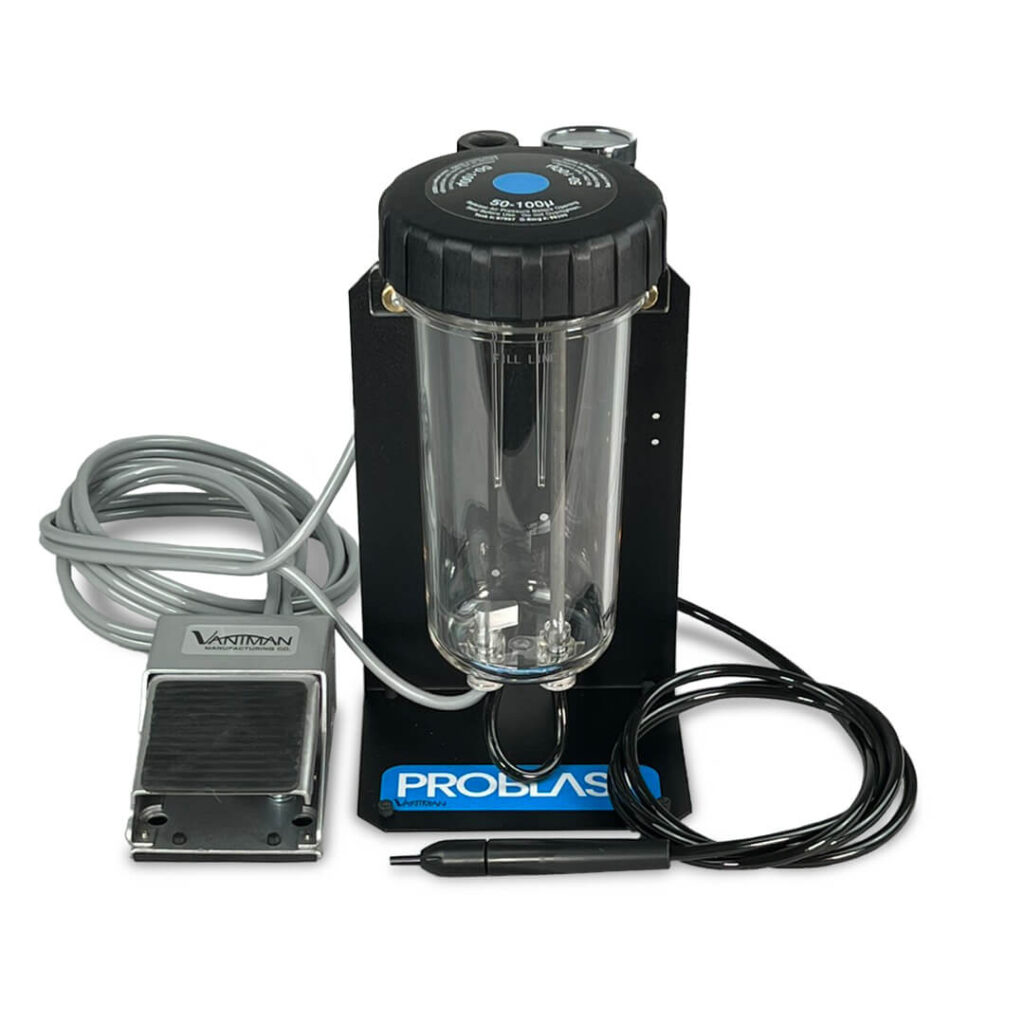
And while it’s Vaniman’s most affordable blaster, it is by no means an amateur tool. Hobbyists and professionals alike need quality equipment, and Vaniman’s blasters beat cheaper, less robust units any day. And with all replaceable parts, a Vaniman blaster can be kept in excellent condition for decades (keeping the long term cost of ownership quite low).
Need More Control? Meet the Master Mobile Problast
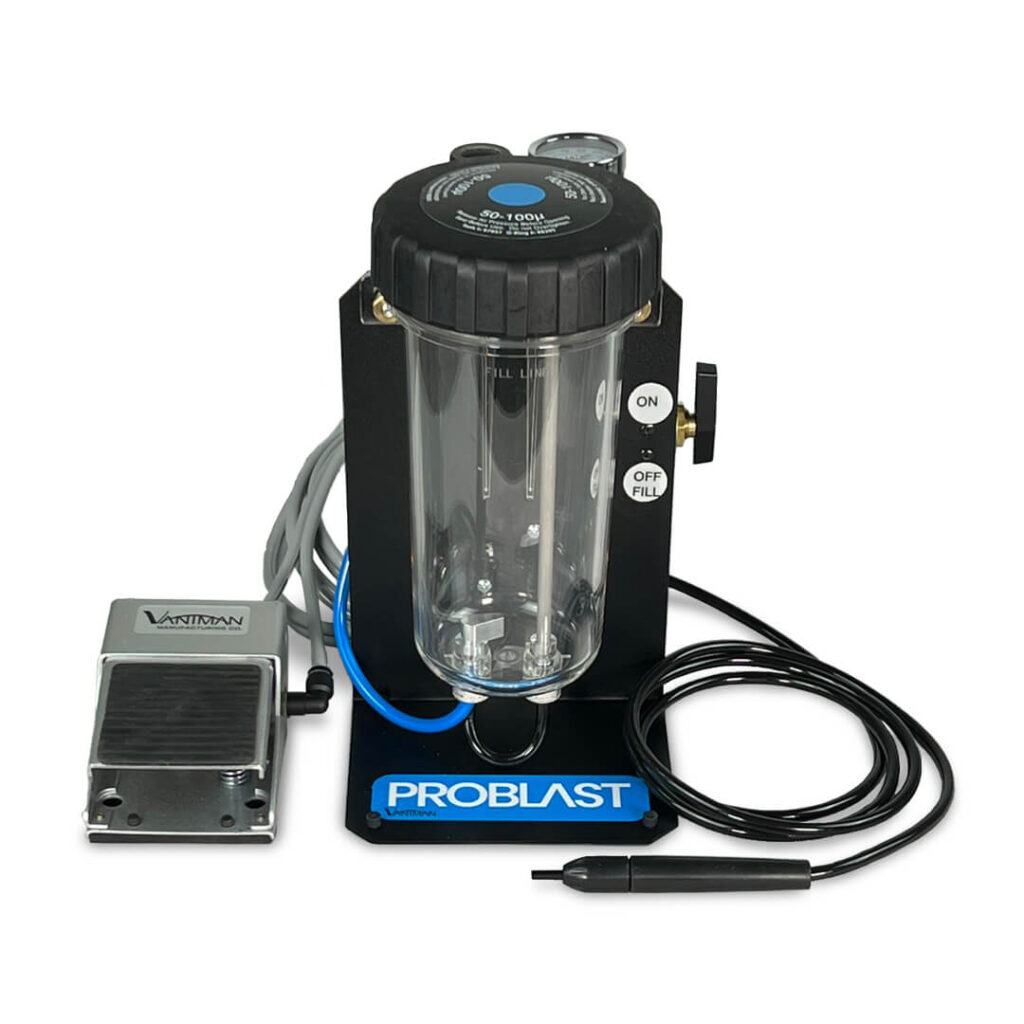
For delicate fossil work where stopping the abrasive stream exactly when you want matters, the Master Mobile Problast adds our Instant-Off feature.
With the standard Mobile Problast, releasing the foot pedal allows residual pressure to bleed through the nozzle briefly. The Master variant maintains tank pressure and stops media flow immediately when you step off the pedal. That provides greater control, reduces excess media use and cleanup, and makes the Master particularly well suited for detailed matrix removal.
For especially delicate or precision-focused fossil work, the added control of the Master variant is worth the upgrade.
Bring Micro-Abrasion to Your Fossil Prep Bench
Whether you’re removing stubborn matrix or carefully exposing fine details, the Mobile Problast line gives fossil preparators a compact, professional microabrasive sandblasting option without requiring a large blasting system.
Compare the Mobile Problast and Master Mobile Problast and find the right setup for your fossil preparation work.
-
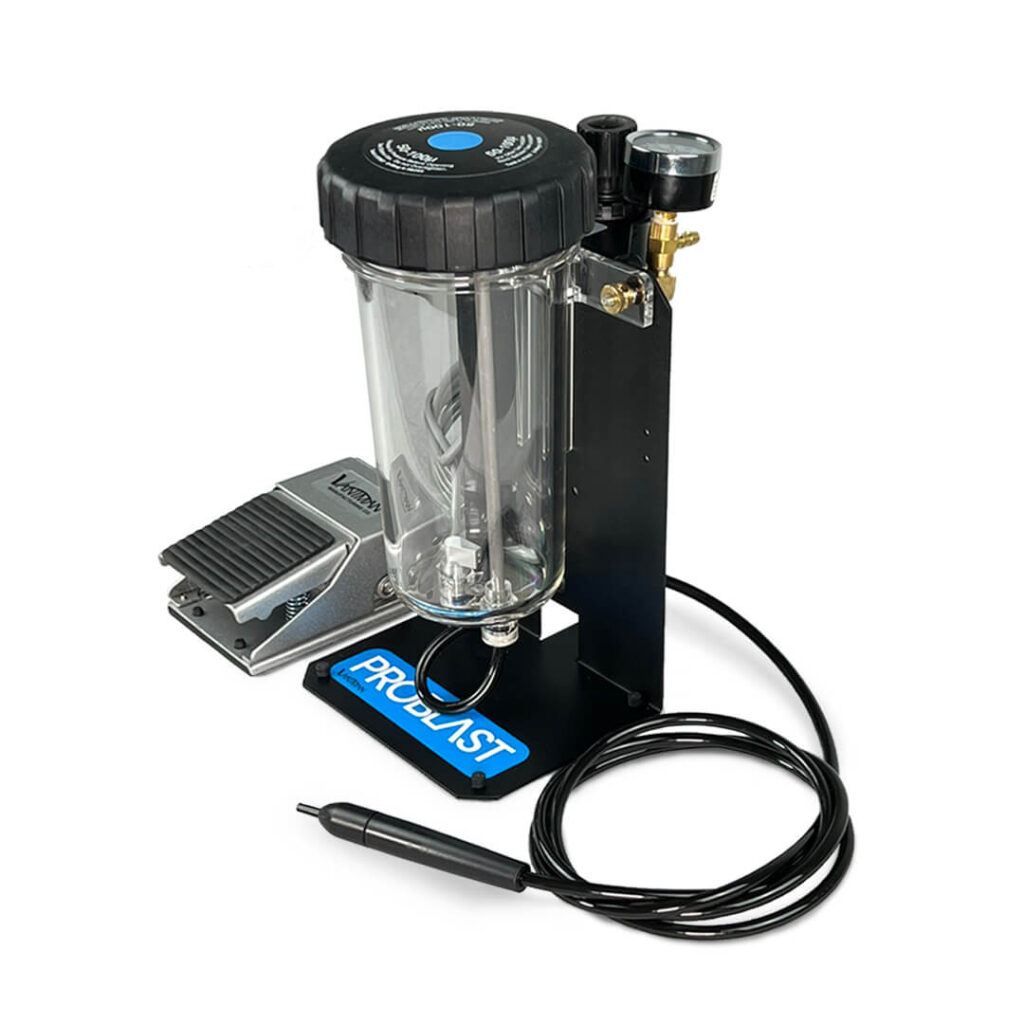
Mobile Problast – 80017
$401.80 -
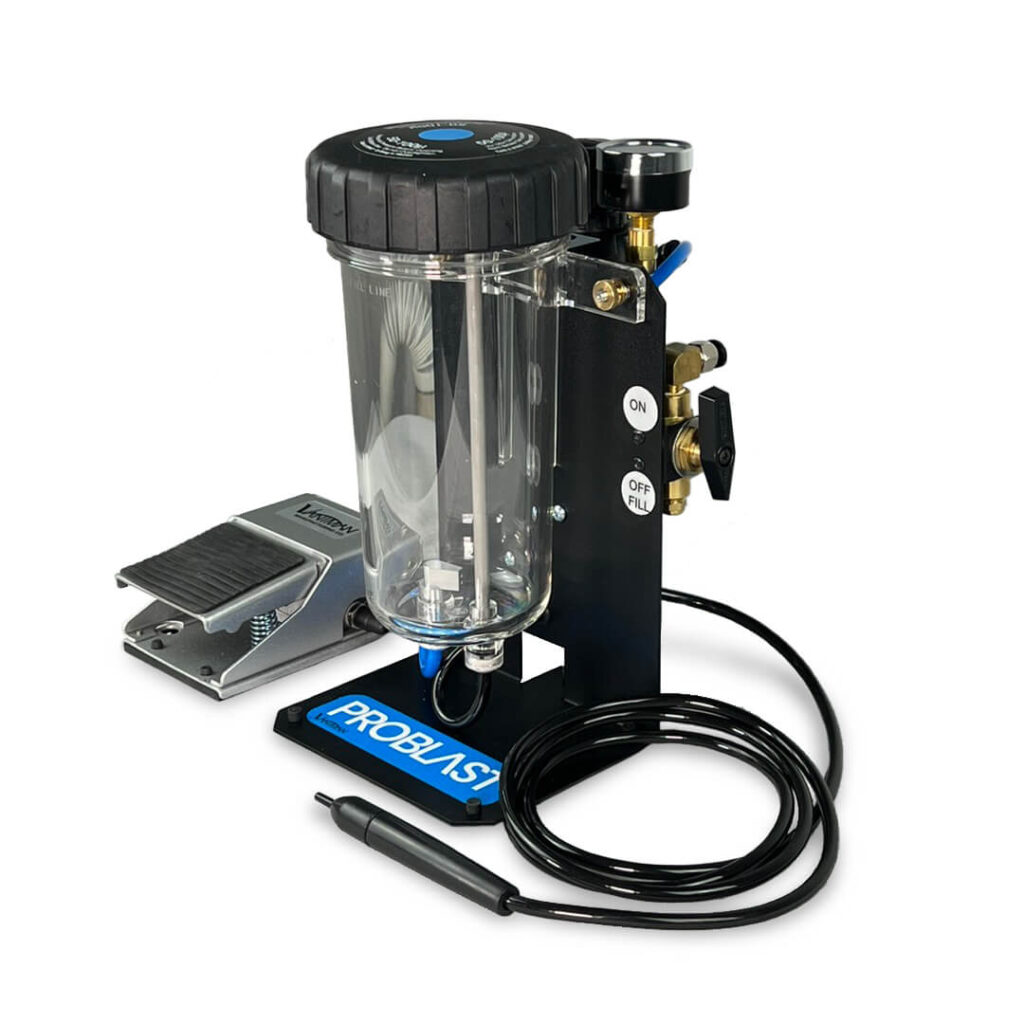
Master Mobile Problast – 80031
$574.01